Dark bleatings everyone! We have a very special guest post this week, so without further ado, take it away Alex Davis! (Note: all pictures have been added by me, your faithful Goat Leader, and are based on my own personal ghost story preferences – just putting this here because I don’t want to put words (pics) in Alex’s mouth!)
When Christmas time rolls around, it’s typical for our thoughts (particularly as horror lovers!) to turn to the Ghost Story. It feels like a very long-standing tradition, but why is it the case? Let’s delve deeper into the supernatural side of the season, shall we…
The Christmas Ghost Story has been an annual tradition here in the UK for well over a hundred years, and started to gain popularity in the mid to late 1800s and into the early 1900s. The cold nights, huddled around the fire for warmth, with little other light to speak of, made for an ideal environment for the telling of spooky tales.
Ghost stories do of course lean a lot on atmosphere, so this time of year was very conducive to their telling. They could be adapted to suit families, taking in numerous generations, and even made child-friendly in many instances. I used to as a teenager tell ghost stories to my three younger cousins in my Nan’s conservatory, all adapted to a suitable age of course…
It’s also important to remember another reason the spoken, oral tradition of ghost stories worked so well in this era – globally only 21% of the population was literate in 1900. Ghost stories, however, could be told, remembered and then shared even among the majority who were unable to read. Many of these would tend to be local legends, and as such it’s easy to argue the spoken ghost story of the time was continuing the campfire storytelling tradition.
Jerome K Jerome artfully captured another reason ghost stories were told in the season, particularly on Christmas Eve. The belief was that ghosts would not be willing or able to abound on a holy day like Christmas itself, so would make extra effort to be merry and mischievous the day before! As such the focus was on Christmas Eve – some have speculated the idea that the tales were meant to distract the spirits, or keep them busy on that day rather than having them causing so much trouble.
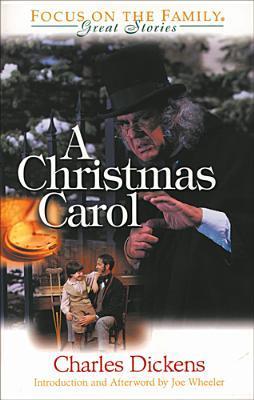
And let’s not forget Dickens’ A Christmas Carol, which hit a cord with readers then and has done ever since, combining all the good and positive sentiments of the season along with the spookiness of the ghost story. It remains an all-time classic in the field, and was a huge hit at the time – the initial print run sold out in 5 days, and by 1844 (just a year from its initial release) thirteen editions had been published. Dickens began to perform the story as a performance in 1849, with the event selling out over 100 times right up to his death in 1870. By February 1844 there were already nine stage performances showing – the story was a true phenomena on publication to rival anything we might see today, and remains one of the most commonly adapted stories in fiction
The book is credited with many things – including the popularisation of the phrase ‘Merry Christmas’ along of course with ‘Bah Humbug’ and the idea of someone being a ‘Scrooge’ – a miserly, penny-pinching person. It also (it is claimed!) promoted a rise in charitable giving in the UK in the years following its publication, and it’s also been speculated that it led indirectly to changes in workers’ rights, particularly pertaining to time off around Christmas.
With all of that said, this was far from the only foray that Dickens made in the ghost story, and he was seen in particular to write and publish regularly during the Christmas season, including the iconic ghost story of ‘The Signalman’.
While Dickens was a big name, we of course cannot forget the huge influence of MR James – much of the genre still operates on five rules that he defined in his essay ‘Some Remarks on Ghost Stories’, written in 1929 and published in The Bookman.
1) An illusion of truth.
The tale is fictional, but written to be believable.
2) ‘A Pleasing Terror’
The idea of being pleasantly frightened, not deeply disturbed or upset.
3) No gratuitous bloodshed or sex.
Arguably one of the main differences to horror?
4) Lack of explanation.
The source of the ghosts remains a mystery.
5) Set in the writer’s own day
Could certainly argue against this now? Ironically the success of the Jamesian ghost story has paved the way for the ‘antiquarian’ tale, with more fiction in the genre now set in the past that in the present day.

M.R James is massively linked to the Christmas season for another reason – the tradition of the BBC ‘Ghost Story for Christmas’, which was a feature on our screens for many years from 1971-1978 (a little before my time) and more recently on and off since 2005. Those early adaptations were largely led by Lawrence Gordon Clark, whereas the modern takes have mostly been driven by Mark Gatiss.
The popularity of the ghost story was unprecedented in the Victorian era, with many arguments given as to why this might have been the case. One of the most common theories is that the popularity of spiritualism led to a boom in stories of spirits and hauntings.
This was an era where there was a huge interest in spiritualism – seances were often conducted either as an entertainment or as a serious endeavour – so the concept of the afterlife and what happened to the dead was very much culturally ingrained. Spiritualism was considered to be serious scientific study in this time, and the use of Tarot Cards, Ouija Boards and Psychic ‘Shops’ became regular occurrences. Victorian were also renowned in many cases for the ‘memento mori’ – family photographs taken with one of the family member after their death. This might sound morbid now, but was commonplace at the time as a way to capture a final impression of those that had passed.
Spiritualism may also have been a response to the Industrial Revolution, a harking back to old ways and old beliefs as people moved out of the country and into cramped and uncomfortable lifestyles in the city. Was there a sense that the advance of technology was leading to connections with the spirit world being lost?
“The Victorians were haunted by the supernatural. They delighted in ghost stories and fairy tales, and in legends of strange gods, demons and spirits; in pantomimes and extravaganzas full of supernatural machinery; in gothic yarns of reanimated corpses and vampires. Even avowedly realist novels were full of dreams, premonitions and second sight. It was not simply a matter of stories and storytelling, though, for the material world they inhabited often seemed somehow supernatural. Disembodied voices over the telephone, the superhuman speed of the railway, near instantaneous communication through telegraph wires: the collapsing of time and distance by modern technologies that were transforming daily life was often felt to be uncanny.” [Bown et al. 1]
It is sometimes argued that the Victorian ghost story in itself was a response to the anxiety over the afterlife and the supernatural, and offered comfort as well as chills to listeners and readers. It could be cathartic for people to face up the possibility of becoming a ghost, or perhaps there was some solace to be found in the idea that there was something to come after human existence.

Some argue that the ghost story also proved popular with the working class and even the middle class because it often spoke of educated and wealthy mean being shocked and having their lives destabilised, as we see in a Christmas Carol and in much of MR James’ work.
While there might be elements of the popularity of the Ghost Story at Christmas that are obvious, there might well be more to the question than we ever thought. By the time we take in performance complimenting work on paper, spiritualism, cultural tensions and an incredible array of writers emerging we have all the contributions to the beginning of a tradition, a perfect storm of factors that produced the festive phenomena we know and love today.
And if you’re looking to get some ghost story goodness this season, why not check out WINTER HAUNTS? This one-day online event runs on the 11th November and features a series of workshops, interviews and panels in the ghost story, the Gothic and the supernatural. The event is going to feature acclaimed authors such as Mariana Enriquez, Catriona Ward, Tananarive Due, Alix E Harrow, Jess Kidd, Rosie Andrews, Stuart Turton, Anna Mazzola, Carly Reagon, Ally Wilkes, Lucy Barker and many more! For more information visit https://www.eventbrite.co.uk/e/winter-haunts-2023-tickets-653898486977
 Happy Goat Horror
Leave a comment