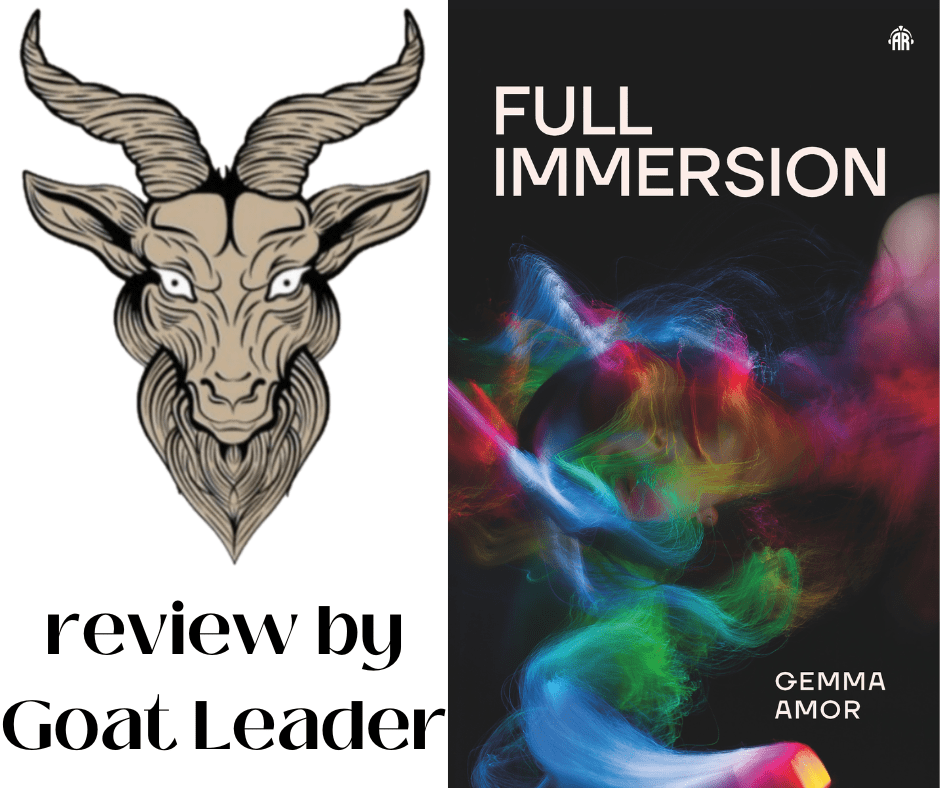
A traumatised woman with amnesia finds her own dead body and sets out to uncover the truth of her demise in a race against time, sanity, crumbling realities and the ever-present threat of the Silhouette.
When Magpie discovers her own dead body one misty morning in Bristol, it prompts her to uncover the truth of her untimely demise. Her investigations take her on a terrifying journey through multiple realities, experimental treatments, technological innovations and half-memories in a race against time and sanity. Accompanied by a new friend who is both familiar and strange, and constantly on the run from the terrifying, relentless presence of the mysterious predator known only as Silhouette, Magpie must piece together the parts of her life previously hidden. In doing so, she will discover the truth about her past, her potential, and her future.
Dark bleatings everyone! I read this book a few months back and it’s taken me this long to process my thoughts competently enough to write this review. Totally unique, unlike anything I’ve ever read, and an absolute trip. The scenes of horror get increasingly stressful and intense – that feeling that something terrible is about to happen is present right from the first few pages. Amor steadily builds the tension and takes her time upping the ante, which was an element of the book I really appreciated because I see it so rarely these days. I read about a thousand books a month, and it’s so unusual that I get to enjoy a book that takes its time this way, that trusts the reader to stay with it, that trusts itself to keep a captive audience. And this is the kind of story that needs that connection from reader to protagonist.
The A Plot is what’s happening in Magpie’s psyche. She’s working to unravel the mystery of her subconscious and why she is so terribly plagued by intrusive thoughts and depression. It’s a hard but excellent read. Despite the surreal framing device, Amor manages to explore some pretty heavy mental health topics in a way that is relatable to people who might be suffering or living with these types of issues. Written from an angle of pure empathy, self-exploration, and the desire to understand and heal, this has got to be the most sincere and respectful approach to mental health as a major plot and character point that I’ve ever read.
And it’s intriguing and scary. Our main character has memory issues within the confines of her therapy, and so as she discovers things about herself and uncovers memories of her recent past, so do we. I absolutely loved being in tandem with Magpie on her journey of self-discovery. I think it was an excellent way to approach telling the story because initially, we don’t know what’s happening, but the clues are there if you want to start forming a theory. I had some ideas about what had happened to Magpie before she realised it. The fact that Amor started by plunging the reader into the dark, but slowly illuminated elements of Magpie’s life in a way that still kept her in the dark, so we come to know more than she does, was an excellent way to sneak in a growing sense of discomfort and dread.
The B Plot revolves around what’s going on outside of Magpie’s mind in the real world, specifically in the control booth where a doctor and a technician are monitoring her. Again, we’re given the impression that things aren’t right, aren’t safe, but there was no way (for me) of predicting where that was going to go. I was not disappointed, to say the least. Amor explored and opened up two worlds simultaneously in this story, exploring inner and outer conflict at the same time, raising the stakes for both in ways that were disturbing because they became so unpredictable… and just when you think you have it nailed!
As a sci-fi horror, this is as immersive as a book comes, and succeeds in hitting the mark in both subgenres for me. The horror scenes are… I mean, dear lord. Talk about keeping me on the edge of my seat. With the lights on. Cuddling my cats for dear life.
Outside of the fictional aspects, where I think Amor excelled is in her reflection of the mental healthcare system in the UK. She also excels in exemplifying the reality of how women in particular are treated in this system, even in this day and age (will this ever change?). At the beginning of the story, Magpie has run out of options. She’s reached her last resort, there is nowhere but this experimental treatment to turn, and she begs for it. That’s an obvious comment on real-life waiting lists, lack of options (especially if you can’t afford to go private), lack of understanding from professionals within the healthcare system, and the hopelessness felt by the thousands of people who need help, but don’t know what kind of help, why, or where to turn for it.
Beneath that, there are subtle indicators and reflections that expand on this throughout the book. For example, in the control booth, Magpie is rarely (if ever?) referred to by name. She’s the patient, the subject. She’s an experiment. The technician who monitors her vitals doesn’t understand her, and it becomes increasingly clear that he also fears her. She’s a woman who begged for help, and yet she’s viewed as some sort of threat. Her mental health, in the eyes of even the professionals, casts her as The Other. The doctor, a woman responsible for helping her, keeps pushing even when it starts to look hazardous to Magpie to do so. The doc doesn’t understand what’s happening either, but Magpie is an experiment and a potential gateway to some sort of peer and public recognition for the doctor, should things turn out okay. But she’s prepared to push on, regardless of significant risk, because Magpie is expendable. This would never happen to a patient that, say, was healing from a broken bone. But a break in mental health? Apparently, patients are fair game.
I can’t claim to know how Magpie feels exactly – I don’t share her issues. But what I can say with absolute confidence is this – if Amor’s aim with this book was to spread awareness, share empathy and understanding, and make people who suffer the loneliness of severe mental health problems feel seen, she succeeded in spades. I’d go as far as to say that even though this book is an extremely harsh and difficult read, it’s an important, trail-blazing piece of work. I think it’s helpful because it’s validating. Sometimes, instead of “things aren’t that bad, things will get better, take these pills, get more sleep, get more exercise, you should try to help yourself”, people need to hear “I hear you, I see you, your feelings are valid.”
If you’re living with problems and are worried about triggers, for obvious reasons, check the warnings for this book before you dive in. Everyone is different, and maybe for some, this isn’t a book for now, but maybe later. However, I personally found it helpful. There’s a sense of community and kinship in it that I can’t quite explain.
Gemma, if you read this, I hope you realise the significance of what you’ve done with this book. After delving into your reader-base and places online where people are discussing this, it’s apparent to me that you have helped people in writing this story.
I’d recommend it to sci-fi and horror fans, particularly those who enjoy speculative science-y elements. If you’d like to get a copy or check out the author, there are some links below for you:
 Happy Goat Horror
Leave a comment