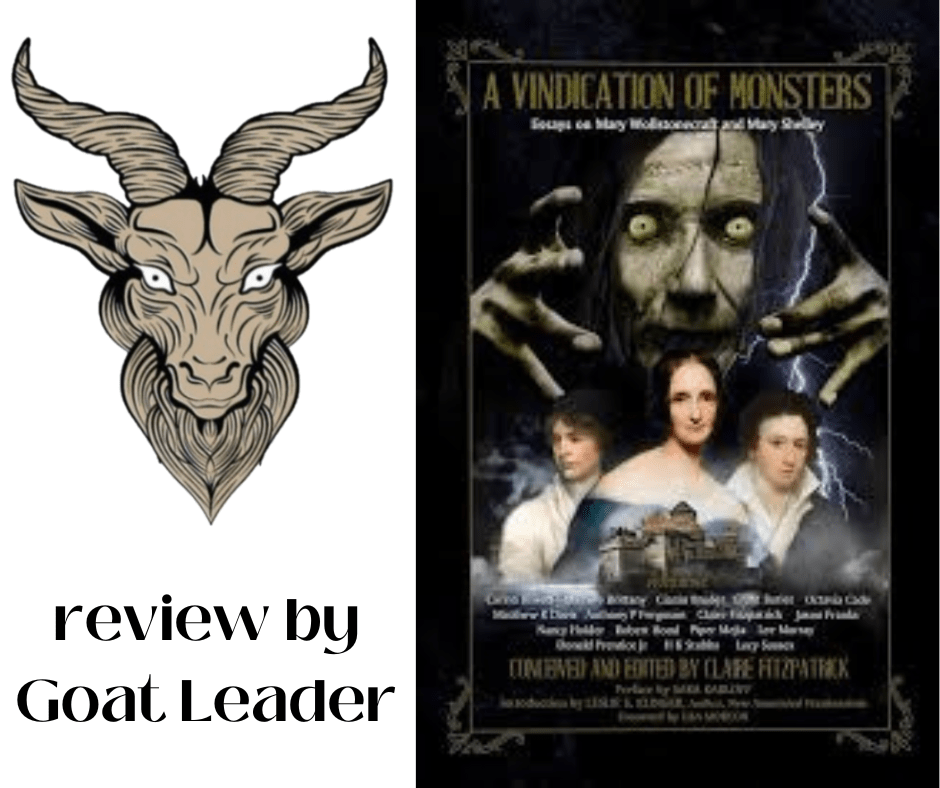
In 1797 an extraordinary visionary died, leaving behind a grieving husband, a two-year-old daughter, and a newborn. The woman was Mary Wollstonecraft, her daughter Fanny Imlay, and her baby Mary Godwin, who, through many trials and tribulations, grew up to become the remarkable Mary Shelley, creator of one of the most important books in literature: Frankenstein; Or, The Modern Prometheus. While many books have examined both women’s lives, their remarkable similarities, their passions, joys, and their grief, A Vindication of Monsters: Essays on Mary Shelley and Mary Wollstonecraft, delves deeper into the stories behind both women, their connections to historical events, society, their philosophies, and their political contributions to their time. These essays and memoirs explore Mary Wollstonecraft, Mary Shelley, and Shelley’s circle of friends, including her husband, the capricious poet Percy Shelley; the libertine Romantic Lord Byron; the first modern vampire author John Polidori; and other contemporary creatives who continue to be inspired by both women today.
Dark bleatings, my beautiful tribe! Something a little different today – we’re looking at a collection of essays about Mary Shelley and Mary Wollstonecraft (Shelley’s mother). I very rarely receive requests for non-fiction works, and since this particular book discusses the woman who basically invented science fiction/scifi horror, my interest was piqued. I knew very little about Shelley before going in – only that she authored Frankenstein, did so when she was very young, and wrote it during a retreat with some other heavy hitting creatives of that time. I also knew that although I appreciate what Frankenstein means to literature, it wasn’t a book I particularly enjoyed. I realise that as an avid horror fan, saying so might be sacrilege, but there we are.
I emerged from this collection of essays with an entirely different take on Frankenstein, a yearning to read it again, and a tremendous and true appreciation for Shelley and Wollstonecraft, now that I’m armed with so much new knowledge.
Before I go on, I have to stress that considering Shelley is the main subject here, you might assume – as I did – that this is mostly going to be about Frankenstein, but fear not, because it isn’t. This is one of the most interesting and balanced compilations I’ve ever had the pleasure to read. No two essays deal with the same subject really, and there’s way more here than just takes on Shelley’s most famous work.
We get a timeline of both their lives, followed by a preface written by Sara Karloff (yes, THAT Karloff), and I loved that. It somehow made this work feel family orientated, and set the tone of the book so nicely going forward that reading it sort of felt like chatting over a nice cup of tea with friends. The first few pieces, I begrudgingly admit, do tread some of the same ground, as they discuss Shelley’s writing trip, so there was a bit of repetition of the same information here. However, once we move into wider topics, it’s not a continuing issue.
The essayists taught me so much, and not just in terms of factual information, but in how to approach the texts and works of these amazing, strong women – both of them leading feminists in separate but equally influential ways. I was shown different perspectives on how to analyse Shelley’s creature tale, how to appreciate it within the social climate in which it was written, and in regard to Shelley’s life and experiences.
I’d say I enjoyed every offering this book serves up, though I particularly adored a few of the topics covered. Donald Prentice Jr’s essay explores the concept of beauty:
“This essay hopes to analyze what an articulation of beauty does as opposed to what beauty means” – I LOVE this sentiment, and it gave me a lot to think about.
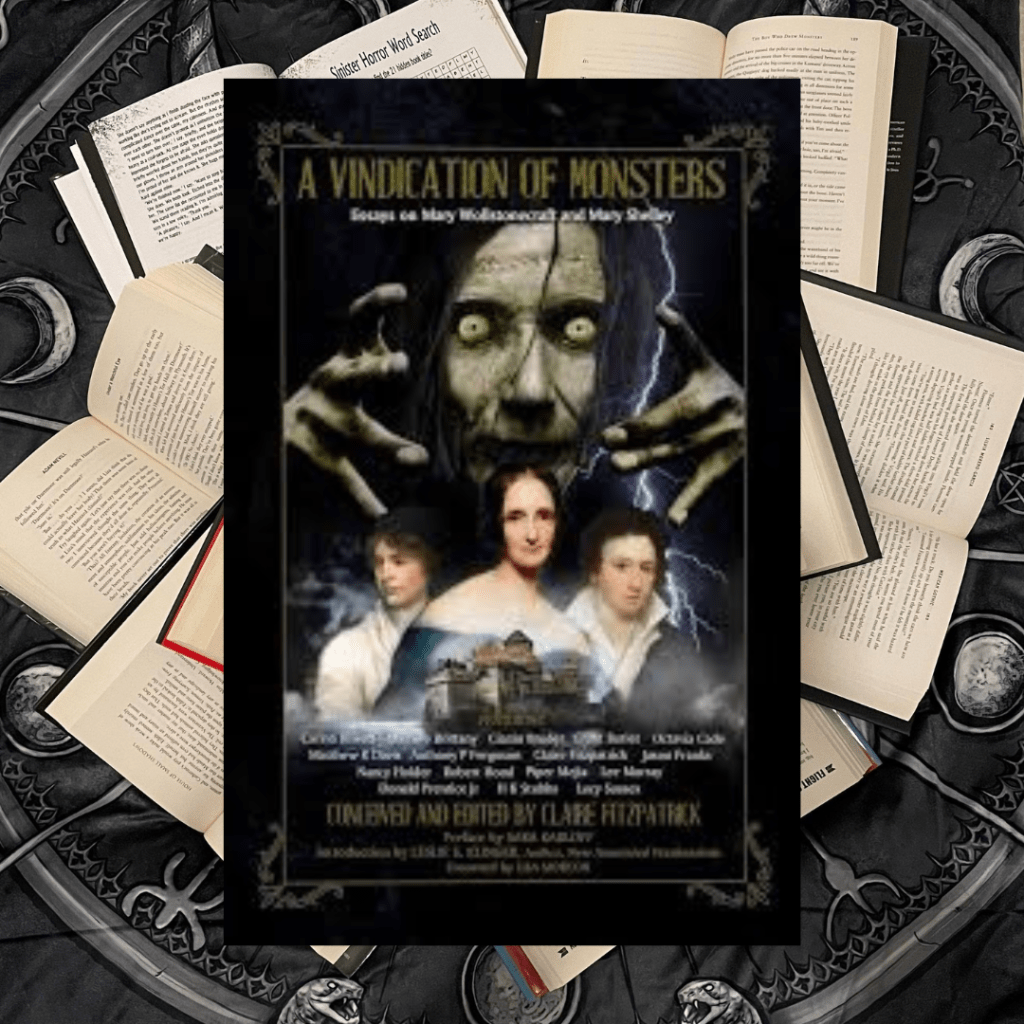
Another standout essay for me was written by Lee Murray (coincidentally, an author that I would consider somewhat of a feminist warrior of our time, just like her subjects – I was delighted to see her name listed amongst the other contributors when I opened this book). She wrote about Shelley’s lesser-know, post-apocalyptic novel, ‘The Last Man’, and reflects upon it through the lens of the recent pandemic, and disease. It was (despite the actual subject matter) a breath of fresh air in that it pays respect to Shelley as an artist, rather than “just” the author of Frankenstein.
We’re treated to reflections on Frankenstein through cinema, his brides, motherhood in the context of scientific creation, discussions of bodily autonomy, medical consent, and the ever problematic and shifting sands of morality. We get a fairly detailed picture of the absolute warrior that Shelley’s mother was in her day, a liberal champion of her time, and the exploration of the real monstrous in life interpreted in her daughter’s fiction.
It is a wonderful, interesting, and dynamic overall work that somehow manages to bring new discussions to the table, even after hundreds of years of analysis. And – I never thought I’d say this – it had me absolutely dying to read Frankenstein again.
I would absolutely recommend this to horror fans of both literature and cinema, particularly to those with an interest in the history of gothic literature. It would certainly make wonderful reference material to anyone studying this topic. For me, it was an informative and eye-opening read that shifted my perspective and opened my mind in ways that just typically doesn’t happen for me when I’m reading essays.
If you’d like to check out the book, or its incredible editor, I’ve popped some links below for you:
Bleeeeat!
 Happy Goat Horror
Leave a comment