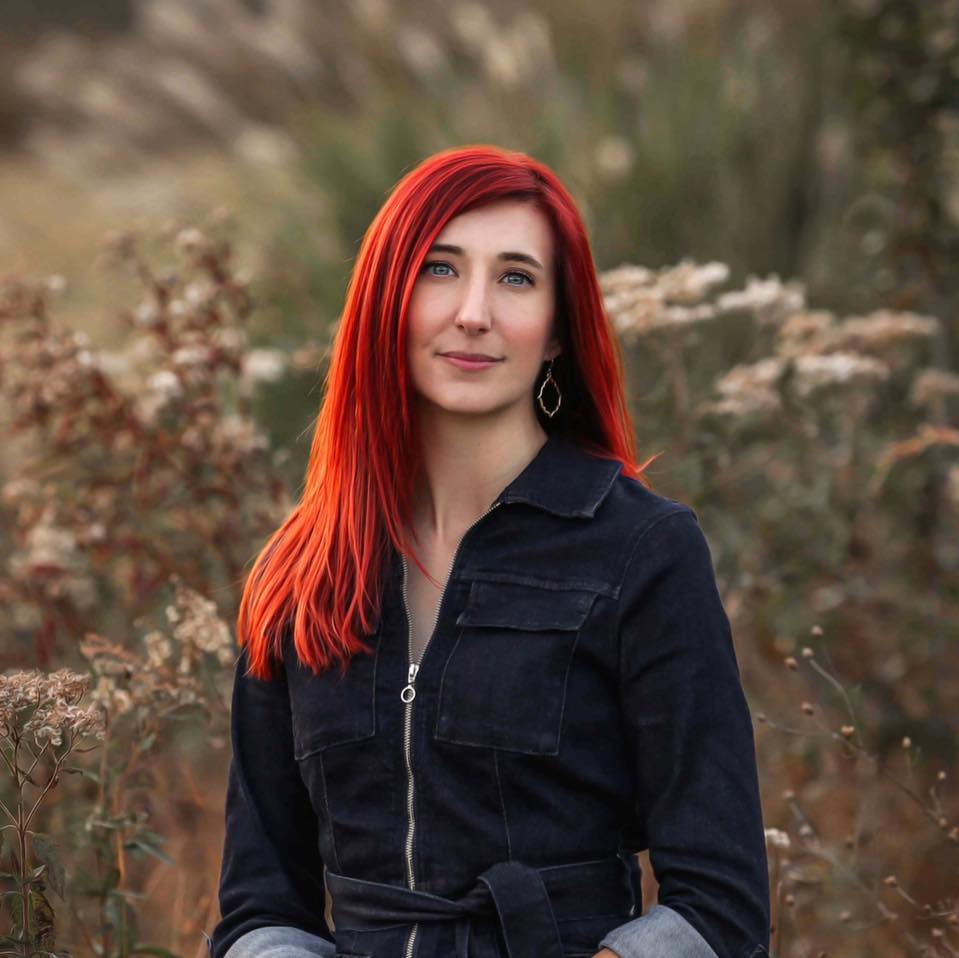
Dark bleatings, my lovely tribe! We’re spotlighting another author featured in my co-edited werewolf anthology (with Stephen Kozeniewski), Strange New Moons, today! Amanda Headlee provided one of the most unique takes on the genre, and most definitely gave us the most heart wrenching story in the pack.
She kindly “agreed” (no Amanda, stop trying to wriggle out of the handcu…) to this author interview. Without further ado, here it is!
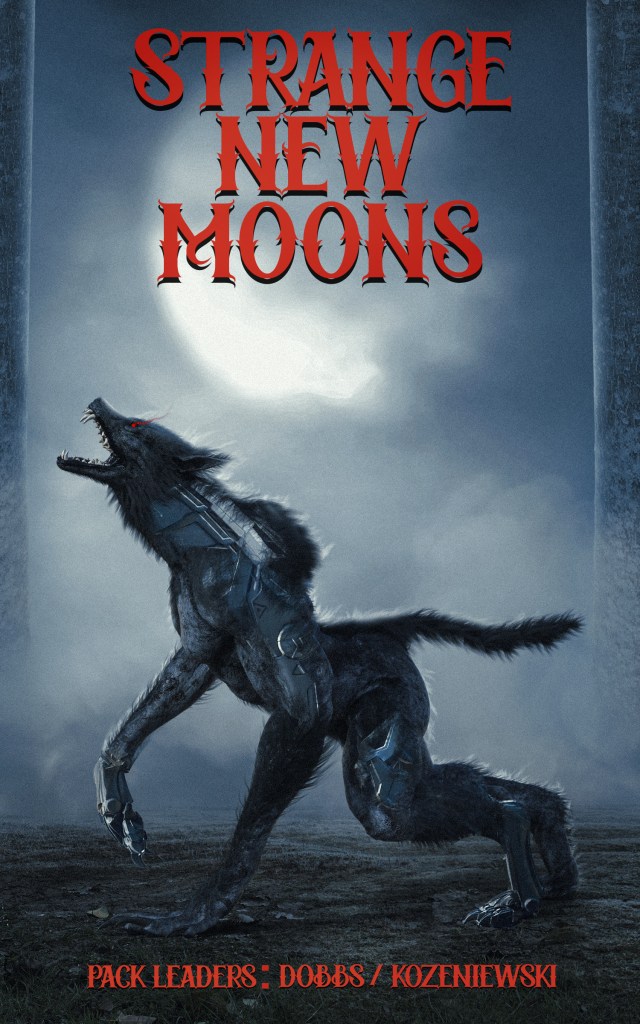
First, a few words about Lark:
“Lark delves into the profound grief that emerges when a sisterly bond seems to be severed. As Lila wrestles with the overwhelming sense of loss, she must face whether the connection has truly disappeared or simply changed. As she navigates her new reality, she learns to find her way between love and absence, questioning what it means to move forward when what she thought was lost may still remain. The story explores the complexities of grief, healing, and the lasting strength of human connection.”
Me: Lark is the most heart-wrenching story in the anthology, and grief is a particularly difficult emotion to convey, despite the fact that most of us have experienced it. How did you approach trying to capture it?
Amanda: My approach to capturing grief in Lark, or any story that delves into such a profound emotion, is first to immerse myself in that feeling. Grief, by its nature, is complex and multifaceted—it’s not just sadness but a web of conflicting emotions, from anger and confusion to deep longing and quiet moments of acceptance. In writing about grief, I tried to focus on the nuances: the moments of stillness where a character might seem fine, but their mind is racing, and the quieter, more intimate moments of loss that sometimes speak louder than words.
I found it essential to ground grief in the everyday. Grief doesn’t just exist in the act of mourning; it often weaves itself into minute instances that span space and time, like a spot left at the table or a reminder in an object that once held meaning. By focusing on those small, evocative details, I hoped to convey the rawness and depth of loss without overexplaining or overwhelming the reader.
Ultimately, the goal was to write in a way that felt honest about the character’s grief while allowing space for the reader to bring their own understanding and experiences into the story. It’s a deeply personal emotion, and in capturing it, I wanted to share a story that resonated universally.
Me: You could have written this story from any perspective. What is it about the dynamic between siblings in particular that drew you?
Amanda: The dynamic between siblings fascinates me because of its unique blend of closeness and conflict, which is often more complicated than any other relationship. Siblings share a history of growing up together, facing similar challenges, and experiencing the same family dynamics, which makes their bond both precious and sometimes fraught with tension. This complexity provided a rich emotional landscape to explore, especially in the context of grief.
This is difficult for me to explain, but I tried to envision what it would be like to lose a sibling at a young age. I based this experience on what I witnessed my sister endure after losing her best friend—who, at the time, was more like a sister to her than I was. My sister and I didn’t have a close relationship growing up. She was best friends with one of our neighbors, and her friend became like a third daughter in our family. My sister and I didn’t become close until her best friend died in her early 20s. I saw first hand what my sister went through in grieving the loss of the person she was closest to. I remember standing next to my sister at her friend’s casket, feeling the wave of loss emanating from her, and that moment still stays with me today.
That loss brought my sister and me closer together, and in a way, I wrote this story as a love letter to her—a way of saying, “I see you, I am so sorry, and I love you.”
Writing from the sibling perspective allowed me to dive deep into both the individual and shared experience of grief. The sibling relationship, with its history and shared memories, makes loss even more layered. It’s not just about the personal pain but also about the unspoken bond and how grief can bring people closer together, even when they’ve grown apart. This made the sibling dynamic the perfect lens through which to tell the story.
Me: Lark is also possibly the most unique take on the theme. When approaching the theme of werewolves, what was the most crucial element that you wanted to explore?
Amanda: The key element I wanted to explore was the concept of transformation—how trauma and grief can lead to unexpected changes, whether emotional, mental, or physical. Werewolves are often shown as torn between their human and animal natures, which I saw as a strong metaphor for the internal struggles people face when dealing with deep emotional pain, particularly in the context of the cycle of loss and grief. I’ve always found the idea of transformation intriguing, but I’ve never liked how it’s typically portrayed as something negative or “bad.”
I like to say that as I enter my middle-aged years, I am now in my “villain era.” What that really means is that I am going through another phase of transformation in this journey called life. What makes this my “villain era” is that I’m transforming into my best self—hence the twist on the “villain” label, based on the old adage that in stories, villains seek change while heroes try to keep things the same. I wanted to challenge the typical trope around werewolf transformations, which are often shown as a curse or something to be feared. Instead, I thought, what if I used a “werewolf” transformation to symbolize a positive change?
Me: What do you think it is about the horror genre that makes it so malleable and perfect for combining with other genres, like sci-fi, for example?
Amanda: Horror is a genre that melds exceptionally well with others because it taps into a fundamental part of the human experience: fear. Horror is the first emotion we encounter upon birth. We’re torn from the dark, warm, and cozy environment of the womb and thrust into the cold, bright, and unfamiliar outside world. From that moment, fear and the unknown become part of our everyday lives. Because of this, horror naturally fits into any genre. It’s the thrill of the “what if” that keeps people engaged. Even in Hallmark stories, there’s an element of horror—whether it’s the fear of having to get along with someone they dislike or the fear of losing a new love. That’s still horror in its most relatable, everyday form.
Horror works so well with other genres because it amplifies the emotional tension and stakes of a story. It adds an edge of danger, discomfort, or unpredictability that makes other themes feel more intense. For example, when blended with fantasy, horror brings a darker, more visceral layer to fantastical elements. But when it comes to blending horror with science fiction, I think the synergy is particularly compelling. Sci-fi is often rife with the unknown, with ideas that push the boundaries of reality and imagination. While fantasy offers an escape into made-up worlds, science fiction can be rooted in possible realities. That makes horror in a sci-fi setting especially gripping—because the horror may not be as far-fetched as it seems. The possibility that the terrifying events in a sci-fi story could one day be real adds an extra layer of fear and intrigue.
Ultimately, horror’s ability to confront our deepest, most primal fears makes it a powerful tool to enhance any genre. Whether it’s the subtle tension of everyday fears or the exploration of larger existential anxieties, horror has a unique way of making themes feel more immediate and compelling, regardless of the genre it’s paired with.
Me: If there’s one thing about werewolf stories that draw readers in, what do you think it is?
Amanda: One thing that really draws readers into werewolf stories is the sense of escapism they provide—an escape into the “other,” something distinctly different from the everyday world. The werewolf represents a transformation that goes beyond just a change in form; it’s an escape into a version of strength, power, and instinct that far surpasses the human experience. The allure lies in the fact that, through the werewolf, readers can step away from the limitations of their normal lives and tap into something primal and untamed. This shift isn’t just about becoming something else—it’s about becoming something stronger, fiercer, and freer than before, where the rules and fears of the human world don’t apply. This combination of freedom and strength is compelling, as it offers an adventure that feels both impossible and thrilling, taking readers into realms that are both unfamiliar and empowering.
Me: People who don’t read or watch horror seem to have many misconceptions about the genre and its fans. What’s one thing you would like them to know about what horror fiction offers?
Amanda: Horror isn’t just about violence and gore; it’s often a layered genre that explores human emotions, confronts fears, and highlights social issues within a safe space for people to process real-world anxieties—whether it involves our inner darkness, the chaos in our realities, or our fear of the unknown. For many fans, Horror is more than just a shock value—it’s a way to engage with the deeper, darker aspects of life that can be both thought-provoking and cathartic.
Me: Has becoming an endurance athlete changed the way you approach writing at all?
Amanda: Being an endurance athlete has taught me the art of persistence—never give up until I cross the finish line or write “The End” (and hope no one notices it took me forever). It has also taught me to take breaks and be kinder to my body. When writing during a lull in my training schedule, I enter a mysterious zone where time ceases to exist, and I’m perfectly fine sitting in one spot with my laptop for 6-7 hours. However, when I’m in full-blown training mode, my stomach turns into a “snack time” alarm clock, demanding regular pit stops for food. So, every two or three hours, I’m forced to get up, snack, and pretend I’m doing something productive.
Me: Speaking of snacks, as a self-proclaimed Destroyer of Ice Cream, which flavour combination would you recommend as the most delicious to destroy?
Amanda: I love a good vanilla bean ice cream with crushed chocolate chip cookies mixed in. The cookies must be of the hard variety—not chewy and certainly not cookie dough!
Me: Okay, Amanda, we’re about to hit the really serious questions. Your answers will determine how likely I am to release you from this inter…er…I mean, buy all of your available works.
The zombie apocalypse has finally rolled around, and you’re constructing your zombie-proof fort. Which two selections from the following list do you recruit to help you keep the dead at bay?
The witch from Hansel and Gretel
The Three Little Pigs
Bilbo Baggins
Barbie
The Borrowers
Amanda: Hands down the witch from Hansel and Gretel and The Borrowers.
The witch is the queen of survival tactics. Not only could she create a formidable fortress out of candy (hello, shelter AND snacks!), but she also knows magic. Plus, she’s a cannibal herself, and having someone like that on your side (provided she doesn’t eat the survivors) makes her a force to be reckoned with. The amount of hurt she could inflict on an undead horde would be astronomical.
The Borrowers are the OG thieves of the apocalypse—tiny, stealthy, and always one step ahead. They can sneak around unnoticed, steal all the good stuff, and get in and out of places where a regular human would be eaten alive. And, despite their hoarding tendencies, the candy fortress would be 500% more organized than necessary, and they’d have the most random items needed to survive the zombie apocalypse.
Me: Finally, tell readers what they can expect if they pick up your books.
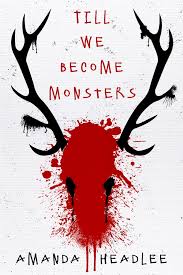
Amanda: My pitch for Till We Become Monsters is that it’s a story about “folklore, family dysfunction, and cannibalism.” While I’ve been moving away from writing stories with cannibalistic themes, much of my work still explores familial structures, and I will always find a way to incorporate a bit of lore into my narratives. I also tend to write within the realms of psychological and cosmic horror.
My novella, This is How a Villain is Made, will be released later this year. I describe it as my “Pygmalion meets Dexter in the Old West” story.
To find me on social media or see my books, visit my website (www.amandaheadlee.com) or Link Tree (www.linktr.ee/amandaheadlee).
Instagram/Threads: @amandaheadlee
BlueSky: amandaheadlee.bsky.social
New Publishing News:
My novella, This is How a Villain is Made, will be released later this year (the exact date will be announced soon). It’s a gritty and atmospheric tale of horror that blends Pygmalion with the dark edge of Dexter in an Old West setting.
I’d like to thank Amanda for this interview – she really delved into the questions and provided such wonderful answers. Be sure to check out her story, Lark, in:
Bleeeeat!
 Happy Goat Horror
Leave a comment