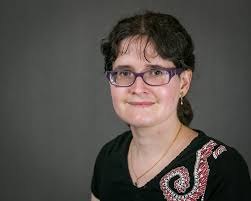
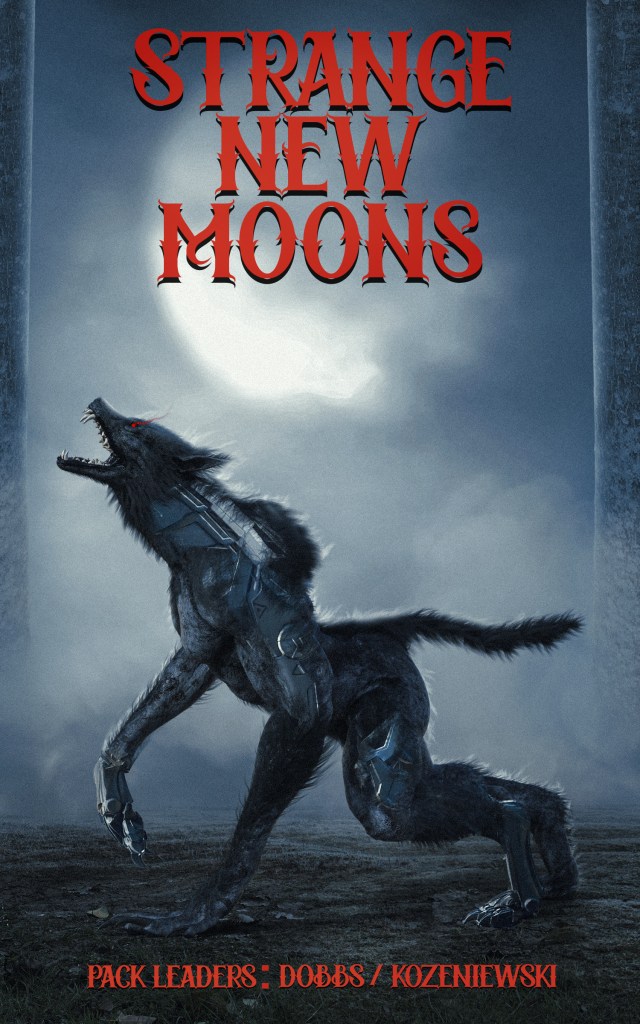
Dark bleatings, my lovely tribe! I’m back to shine a spotlight with another author from werewolf anthology, Strange New Moons – Rose Strickman!
Rose wrote one of my personal favourite stories in the whole book, so let’s get chatting to her!
Me: It’s All for the Best, Sweetie is one of my personal favourites in the anthology, and is also being highlighted as a favourite for readers. Red Riding Hood stories are very common, but your reinterpretation is so unique. What first drew you to the source material?
Rose: Thank you! I’m happy to hear that my story was a favorite! I’ve always been intrigued by the story of “Little Red Riding Hood”. It’s such a dark tale, one that hints at dark secrets. Who is the wolf? How is it that Red Riding Hood can understand his speech? Why does Red Riding Hood lack all fear of the wolf and the forest? Why is there such a connection between Red Riding Hood and the wolf? And where does Grandma fit into it all? I’ve always loved this story for its darkness and mystery, but its ending always left me unsatisfied. This woodcutter coming out of nowhere to slice out Red Riding Hood and execute the wolf by sewing stones into his stomach? Even by fairy tale standards, this makes no sense, and it answers none of the questions raised by the narrative.
In “It’s All for the Best, Sweetie”, I try to address some of those questions, examining a possible explanation for Red Riding Hood’s relationship with the wolf, and how both Red Riding Hood and the wolf are connected to the character of the grandmother. In my version of the fairy tale, not only does Grandma hide some very dark secrets, but the story itself is a dark secret, with an ending that satisfied me far more than the traditional fairy tale’s. “It’s All for the Best, Sweetie” is a tale of intentional blindness and a girl who must embrace the monstrous side of her heritage if she is to survive. Ultimately, I think it is a story about monsters: both the traditional kind–the werewolf that lurks in the woods–and the insidious kind–the smiling grandmother who genuinely thinks she’s doing everything for the best. I hope the reader will recognize monsters when they meet them, both on the page and in real life.
Me: What parts of the original story did you aim to keep, and which elements did you decide to toss, and why?
Rose: I aimed to keep the essential narrative structure of the story—Roja going to visit her grandmother in the woods, her conversation with the wolf—as a sort of spine to hang the story on. However, I expanded on the original story quite a bit, adding background in the form of local folklore and Grandma’s personal history. I wanted to illustrate that Roja’s family has deep ties to the local werewolves (however little Grandma wants to admit it!) and the impact this has on Roja’s ultimate decision. I also set my story in the modern world to give it more immediacy.
As stated before, I find the ending of the original fairy tale deeply unsatisfying. I jettisoned that in favor of Roja seizing her inhuman heritage, and the consequences of that decision. Also, while the attacking werewolf is not blameless, it’s ultimately Grandma who is the true villain! “Little Red Riding Hood” is a story of violence and monsters, and I aimed to expand upon that theme, exploring the different, insidious forms that violence and monstrosity can take, even in those we think we know.
Me: It’s written in letter format, one way only, from grandmother to granddaughter. Did this decision come to you right away or did you first explore other narrative styles?
Rose: “It’s All for the Best, Sweetie” was originally written for an epistolary-themed horror anthology that required all submissions to be in letter format. Ultimately my story was rejected, but I had a lot of fun writing it and was very intrigued by the world I created. The letter format allowed me to explore Grandma’s psychology really well, and keep the story’s big secret safe until the very end. It was very interesting—and frightening—to write from the point of view of someone who genuinely thinks they’re doing everything for the best, despite the fact that they are in fact doing great harm. Monsters never realize they’re monsters.
Me: How do you think your story challenges/explores the themes we typically see in werewolf narratives (repression, duplicity, inner strength, loneliness, etc.)?
Rose: The werewolves of “It’s All for the Best, Sweetie” are in many ways true to the traditional rendition: they are dangerous shapeshifters driven by hunger and violence, whose power is vested in their wolfskins. But, as we see with Roja’s father, they are also capable of love, gentleness and loyalty. I think my werewolves explore the theme of repression: of having to hide some essential part of yourself to win societal acceptance, and the consequences of such a life, both for the individual and society at large. At the same time, however, lycanthropy can be a source of inner strength, as we see when Roja achieves freedom by embracing her inner wolf. By donning the wolfskin and becoming a werewolf, Roja escapes captivity and gets revenge on her captor…but she has bound herself to a life of inhumanity and put herself outside human society forever. How she will deal with that, we’ll never know. Bigotry and deliberate blindness are also themes I try to explore, as we see with Grandma’s attitude toward werewolves. She has a right to fear them, but she doesn’t consider—or, perhaps, allow herself to consider—that werewolves may be people too, and so she ultimately dooms herself. Bigotry, and a refusal to learn from past mistakes, lead to terrible consequences.
Me: What lasting impression do you hope your story leaves with the reader?
Rose: I want to leave readers with the feeling of a good, satisfying story, of lycanthropy, dark secrets, revenge and the many insidious forms that monstrosity and violence can take. As I stated before, I want my readers to consider what a monster is, whether it’s the werewolf scratching at the door or a little old lady kindly handing you a snack. We should remember that monsters never know that they’re monsters, and evil takes many forms.
Me: As an author of 60+ stories, what do you think fuels your desire to write?
Rose: A desire to tell stories! I have always had a lot of stories inside me, and I hope that never changes. I love to create and explore new worlds, and invite others to explore with me.
Me: What is your favourite piece of your own work?
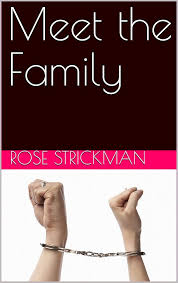
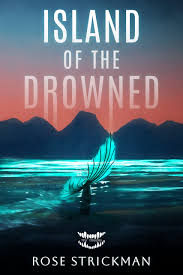
Rose: Wow, tough question! Actually, “It’s All for the Best, Sweetie” is one of my favorites. I had a great time writing it, and I feel like it came out really well. But I’m proud of many of my published works. On the opposite end of the spectrum to “It’s All for the Best, Sweetie”, I love my self-published novella Meet the Family, a comedic romance depicting the antics of Greek gods in the modern world. I am also very proud of Island of the Drowned, a short story published as a standalone title by Graveside Press.
Me: Can you remember the first story you had published (and what was it about)?
Rose: I don’t remember my story’s title, but it was published in The Lorelei Signal about eleven years ago and concerned Lilith, a figure from Jewish mythology, and her decision to heed the pleas of a recently dead man. I guess I’ve always enjoyed writing about complex female characters!
Me: What are the best and worst things about the writing process?
Rose: The best thing about writing is creating and exploring new worlds, spinning entire universes out of nothing. It’s also wonderful when it all comes together and my story really works out. Not so wonderful is when I get stuck and the story flounders, or it doesn’t come out the way I want. And I really hate advertising and self-promotion!
Me: Have you noticed any common themes in your work in hindsight, that you didn’t realise you were subconsciously working in at the time of writing?
Rose: Looking back, I seem to have written about a lot of complex, morally gray female characters, from Lilith to Roja, and many in between. Vengeance and justice are themes that I revisit over and over, especially depicting the supposedly powerless getting revenge against their privileged oppressors. Family is another important theme, and finding love and friendship in unexpected places. I also love rewriting fairy tales, especially in non-traditional settings such as outer space. I also love worldbuilding, applying logic to fantastical settings: if elves really did live forever, how would this impact their society? What if sea levels rose catastrophically? What if there were two species of human, one who lived on land and one who lived in the sea? It’s very interesting to see what world result from such imaginative challenges!
Me: Okay, so this is the part of the interview where we get really serious. When the zombie apocalypse happens, do you have a plan? And what if it’s running zombies instead of the slow kind?
Rose: My plan is to break into a fancy restaurant, crack open a bottle of wine, and eat decadent chocolate cake until the zombie hordes arrive. There is no way I’d ever survive a zombie apocalypse, whether they’re the fast or slow kind, so I may as well enjoy my final moments!
Me: You’re engaged in a fight for your life and can pick two of the following characters to fight with you, but your duel to the death is with the remaining three. Who’s on your team?
Towelie (South Park)
Newt (Aliens)
10 bees (Candyman)
Shooter McGavin (Happy Gilmore)
Magic Mirror (Shrek)
Rose: I’ll take Magic Mirror and Shooter McGavin against 10 bees, Newt and Towelie.
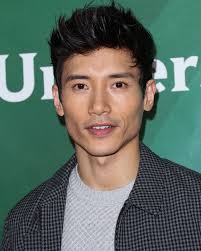
Me: You’re in charge of casting for the remake of The Vampire Diaries. Who are you casting in the main roles?
Rose: Let’s have Manny Jacinto as Damon Salvatore in Vampire Diaries!
Me: Finally, tell readers what they can expect if they pick up your books.
Rose: When you pick up my books, you can expect fantastical settings, strong female leads, unexpected twists, morally gray characters, fully fleshed-out worlds, a lot of darkness, but ultimately a lot of light as well.
Where you can find Rose:
Amazon author’s page: https://www.amazon.com/author/rosestrickman
Bluesky: @rosestrickman.bsky.social
Rose has over 60 publications, mostly short stories, but she also has self-published some novellas on Amazon.
Her short story Island of the Drowned was published as a standalone Tiny Terrors title by Graveside Press Island of the Drowned by Rose Strickman | Graveside Press)
And, of course, don’t forget to check out ‘It’s All for the Best, Sweetie’ in:
Bleeeeat!
 Happy Goat Horror
Leave a comment