Dark bleatings, my wonderful tribe! I know what you’re thinking…”but haven’t you already interviewed Gavin Dillinger?” Why yes, now that you mention it, I have. But I’ve done it again, and I’ll do it again, and continue to do it, because Gavin never fails to entertain me and he is one of my favourites (of all the people I keep in my big fancy people collection cabinet).
Anyway, we’re specifically talking about his newest novel (co-written with Stephen Kozeniewski) today, Looney!
When beloved cartoon characters come crawling out of her TV, army recruiter Gabriella Harman expects a zany romp instead of the hellish nightmare that follows.
One night, haunted by her memories of Iraq, Gabriella downs a stomachful of pills and booze. When her favorite cartoon characters, the Kooky Toons, start crawling out of the TV, she assumes she is hallucinating.
But soon Gabriella finds herself locked in a battle of wits and wills with Herman Hyrax, the world-famous, wise-cracking mascot of the Kooky Korporation. Herman is more than just a stinker, though. He may be a monster, a demon, a god, or something entirely more unwholesome.
Is Gabriella’s descent into a world of cartoonish violence and psychological torment real? Or has she simply gone…
LOONEY!?

You can read my review of Looney! HERE
Q1. Given what happens in the book and what most of the characters are, I have to ask: as a child watching cartoons, did you see evil buried in them?
Gavin: As a child, I watched cartoons and enjoyed them as they were intended. The Kooky Toons of this story are really a revisionist view of the cartoons from the 40’s – 60’s.
In college, I spent a lot of time reading “Actually, the thing you love is evil” type think pieces. While I believe this sort of over analysis is an exhausting way to live, I do believe that it can serve as a fun framework for storytelling. Using this approach we’re able to address just how inhumanely violent cartoons can be to one another and how blatantly racist a lot of those old cartoons were. (Which at the time wasn’t considered a bad thing to be.)
Q2. Which beloved childhood character, if any, inspired your creation of Herman?
There is one specific moment that inspired Herman. In Rhapsody Rabbit, Bugs Bunny attempts to play a piano concert, but things keep occurring which prevent him from accomplishing his goal. At one point, someone in the audience has a cough. The individual coughs seemingly every time Bugs begins to play. Frustrated by this interruption, Bugs Bunny draws gun and shoots the man.
Some time after my childhood I thought about this scene and realized how unhinged it is to shoot a man for coughing. Obviously, the moment in the cartoon is played for laughs, but when you lay out the series of events it’s pure evil. I began reflecting on other actions cartoons take that are excessively violent, despite the fact we are asked to view that particular cartoon as good. I realized there was a lot of overreaction and borderline (sometimes open) hatred between cartoon characters.
Herman is that condensed cartoon hate.
Q3. Did the woodland critters from South Park put you up to this? Blink twice if you need help.
I did not start watching South Park until my 20’s, so I think you’re referencing an episode from when I was a child. On a separate note, may I have some of your hard candies?
Q4. Absolutely not. What do you think the cartoons of our youth – with their typical plots of chaos and attempted murder – taught us as kids?
I have spent longer than I anticipated contemplating this question. I suspect you’re setting me up for a joke, but in considering this question, I realized the characters we should admire are not Roadrunner or Jerry the Mouse, but rather we should look toward Wile E. Coyote and Tom the Cat. We should aspire to be the person who gets their butt handed to them but then stands back up and tries again.
The framing of the prey being the protagonist who outwits their foe easily, almost establishes this idea that retaliation is always good and when someone starts something you are justified in going further. I say almost because, it’s just a cartoon… right?
Q5. What possessed inspired you to merge cartoon characters with cosmic Lovecraftian horror and real-world issues like PTSD?
Let’s start with the PTSD. I think in everything I write, I want to include something grounded that people can relate to. Characters with perfect health, no depression/anxiety, no financial troubles, just casually stumbling into adventure, I can’t relate to them. I don’t know anyone like them. They aren’t real to me.
For this story in particular, PTSD felt like that natural grounding point. I’m not someone who buys into the whole “thank the vets” stuff in the US because in my opinion it’s used as a shield to absolve the military of criticism and to prevent us from seeing what veterans actually suffer. We’re shown these images of men and women who are unscathed, clean shaven, fit. They’re incredible humans who are above reproach. The reality is, war will wreck you. Leave you physically, emotionally, and mentally debilitated. I didn’t want to write about a character who was doing well and just happened to have military training. I wanted to write about someone who was at a breaking point, and when I described the protagonist (Gabriella) to Stephen he knew exactly the type of person I was talking about.
I felt it was important to portray someone who has taken the damage of war and lives in a vulnerable state because that’s how many people are when they return from war. We need to stop viewing vets as Jack Reacher and Jack Ryan. We need to portray them as they really are, humans who have needs that are not being served by the government that sent them to suffer overseas.
As for the Lovecraftian element, that was all Koz. It was a brilliant decision, because you can kinda do whatever you want when you get Lovecraftian, which justified the toons crawling out.
And as for why cartoons? I like the juxtaposition, taking something sweet and funny and cheerful, turning that into horror. That’s fun for me.
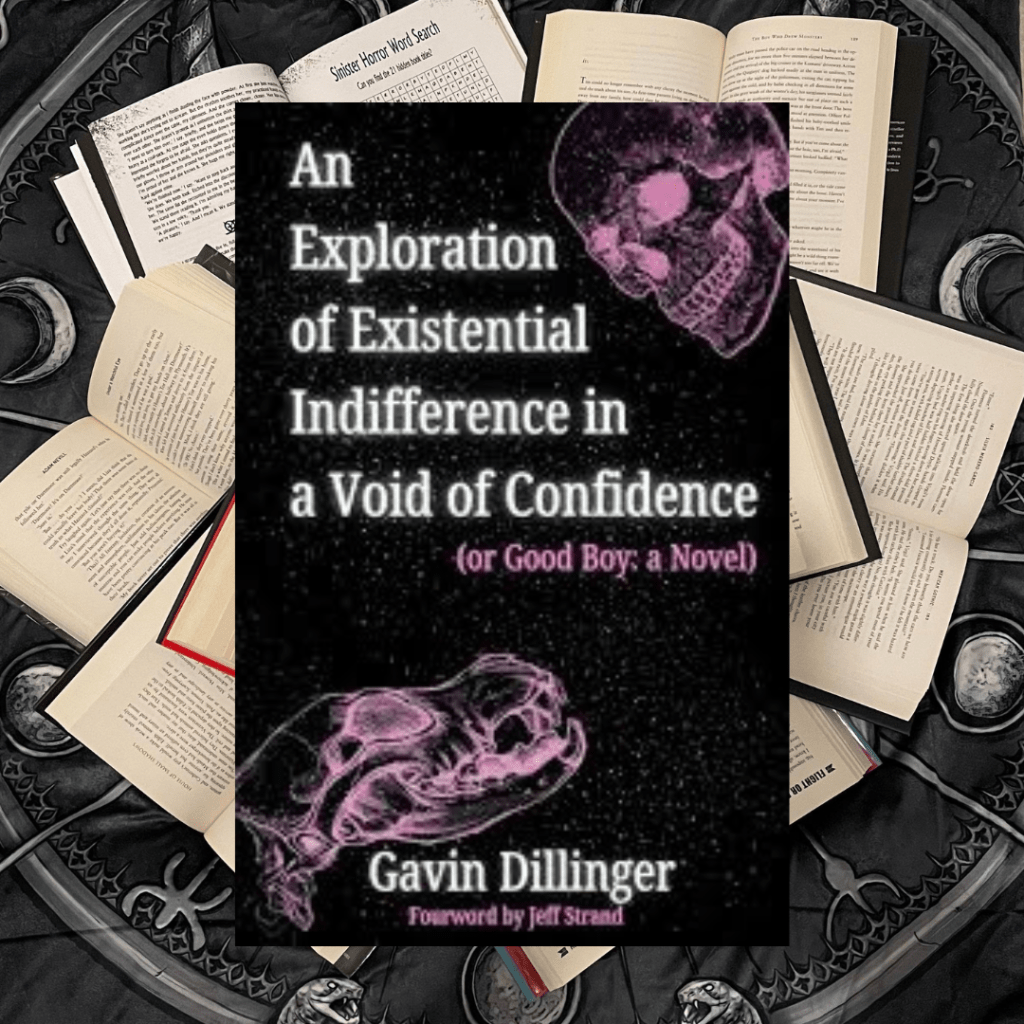
Q6. The main takeaway for me, thematically, is the struggle for power and control (and the loss of it). I feel like Herman’s quest to regain his power and former glory works as a parallel to Gabriella’s desire to feel “normal”, in the wake of PTSD. The other characters are at the mercy of Herman, which makes me think they’re extensions of Gabriella battling her own Herman (trauma). Was it a conscious decision to explore and exemplify Gabriella’s internal struggle through hilarious cartoon fights, complete with boingy sound effects, or have I just had too much caffeine and read way too deeply into this?
It’s fascinating you say that because power distribution is absolutely part of what I intended, however I was viewing it through a systemic lens of patriotism and the way in which people endow America and the military with this elegance but that endowment of power feels misplaced to me.
Now that said, while your description is different from how I view the book, I do not believe you are incorrect. One of the fascinating things about art of any kind is its ability to take on a meaning beyond that which was originally intended, and reading your interpretation makes me reconsider what the book is actually saying, because the parallels you describe are undeniable.
Q7. No matter how true Arty’s aim is, she never hits her target. If you were a cartoon, what creature would you be and what do you think would be your own fatal flaw?
I would be a bear that fails to hibernate because he can’t stop drinking caffeinated beverages. He wants to sleep, but he gets distracted by the smell of coffee and then he can’t sleep.
Q8. What creature do you think your co-author, Stephen Kozeniewski, would be, and what in cartoon land is his fatal flaw? Would you be friends or foes?
A dung beetle. His fatal flaw is the way he always eats turds and LOVES them. The dude can’t stop munching on poop. We’re not friends now, so I don’t know why we’d be friends as cartoons.
Q9. Pitching your book to your target audience is one thing, a la the back cover synopsis, but I want to know how you’d pitch this to some highly esteemed and snooty literature organisation. You know, the kind that sneers and looks down at the likes of Stephen King. Pretend you’re talking to that bird that keeps yelling “Serpent!” in the original Alice in Wonderland, and your life depends on getting her to read LOONEY!
Look, Dr. Professor, Esq, I get it. You love reading Shakespeare and claiming you enjoy it. I have friends who drink IPAs, so I understand that there’s fun in pretending to like things. But I also know you have your dirty secrets. That joint you roll in the evening. The junk food you claim you’re too good for. The porn you jack it to.
I’m not saying any of these things make you a bad person. I’m just saying that you don’t have to do everything for the sake of public appearance. So next time you think about jacking off, stop. And instead, make your dirty secret reading LOONEY!
Q10. That would work on me. I assume there are dire consequences for people who still refuse to pick up a copy of LOONEY! – what are they?
Not really. Just the weight on their consciousness knowing that their refusal to purchase the book has a direct impact on my self-worth as a human being.
You heard it here, folks. Read this boingy, springy horror show or Gavin will cry in the corner of his glass cage, while he wonders if he even really knows how to hold a pen.
 Happy Goat Horror
Leave a comment