
Some places don’t let go….Offered a lucrative job at the mysterious Hacket House, Jane agrees to travel across country to live at the mansion. After all, a fresh start is just what she needs. Besides, the remote house is a long way from the past she is still running from.Arriving at her new home, she finds a strange red house set in a wood of red, gnarled trees. The same trees used to build the house and the grandfather clocks that haunt every room and dark corridor.Jane quickly realises that there is something very wrong at Hacket House and the village of Bramley.Why is there a graveyard in the garden of Hacket House? Who are the people in hoods who haunt the house at night? What are they doing with the old man in the bed? Why is somebody moving the grandfather clocks? Who is the strange woman no one will admit exists? What are the shadows that scoot across the walls like cockroaches? Who is Erazmus Nark whose grave nothing will touch?As the sinister behaviour of the village escalates and her own past closes in around her, Jane learns that just because something is dead, doesn’t mean that it’s gone.
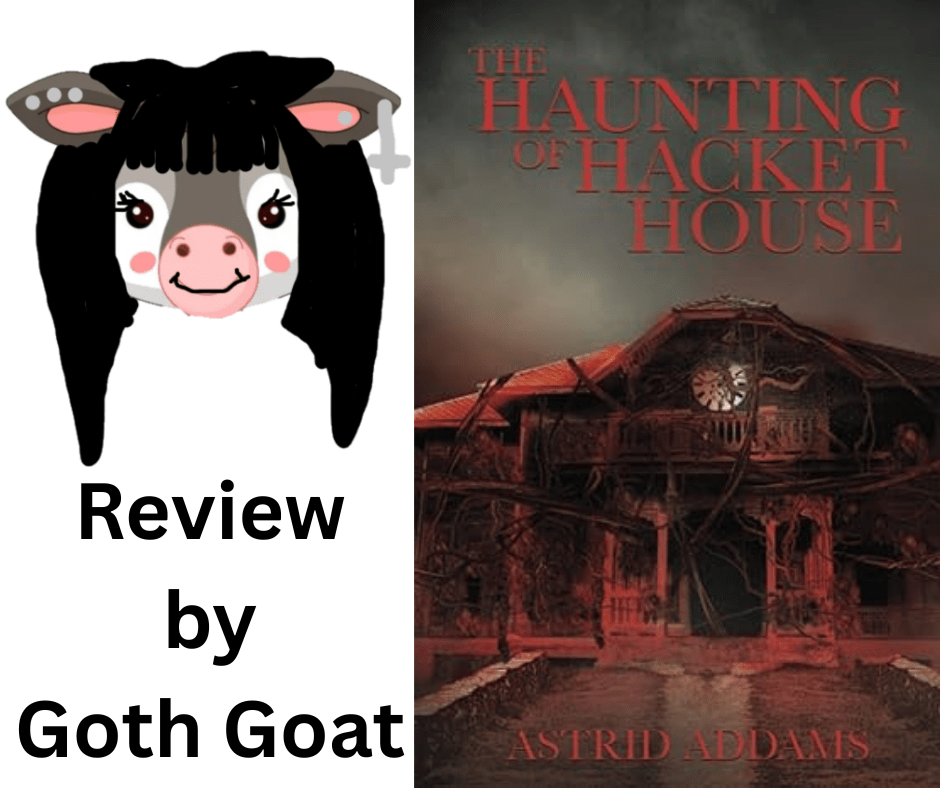
Prologues are a time-honoured tradition in horror. At their best they are almost short stories complete in themselves that prepare us for one hell of a ride. I would respectfully suggest that the prologue at the start of The Haunting of Hacket House is of this type. I was pulled straight in and felt Clive’s terror as he ran like a rat through the maze of Hacket House.
Jane, the protagonist of the main story, engages the reader very quickly. Running from a painful past, she accepts a job as Mr Smithson’s carer at Hacket House. The house and grounds are red and black; its residents are strange and uncertain in number, and every room but one is filled with grandfather clocks.
“Here in the red walls of Hacket House, listening to the constant murmurs of the clocks and Mr Smithson’s screams, reason not only felt dead, but extinct.”
I don’t entirely understand why there are so many clocks, but the thing that confuses me most is Jane’s relationship with the house; it feels like that of owner rather than staff – the garden she designs and plants is HER garden, not her employers’, but maybe this is a sign of Jane’s unsteady relationship with reality.
The local villagers are either too friendly or hostile, that is before they start to disappear, and as the story progresses, Jane’s grip on reality stutters and falters. At times the prose is clunky with careless repetition, but it retains a richness despite this, and brings the fictional places to life.
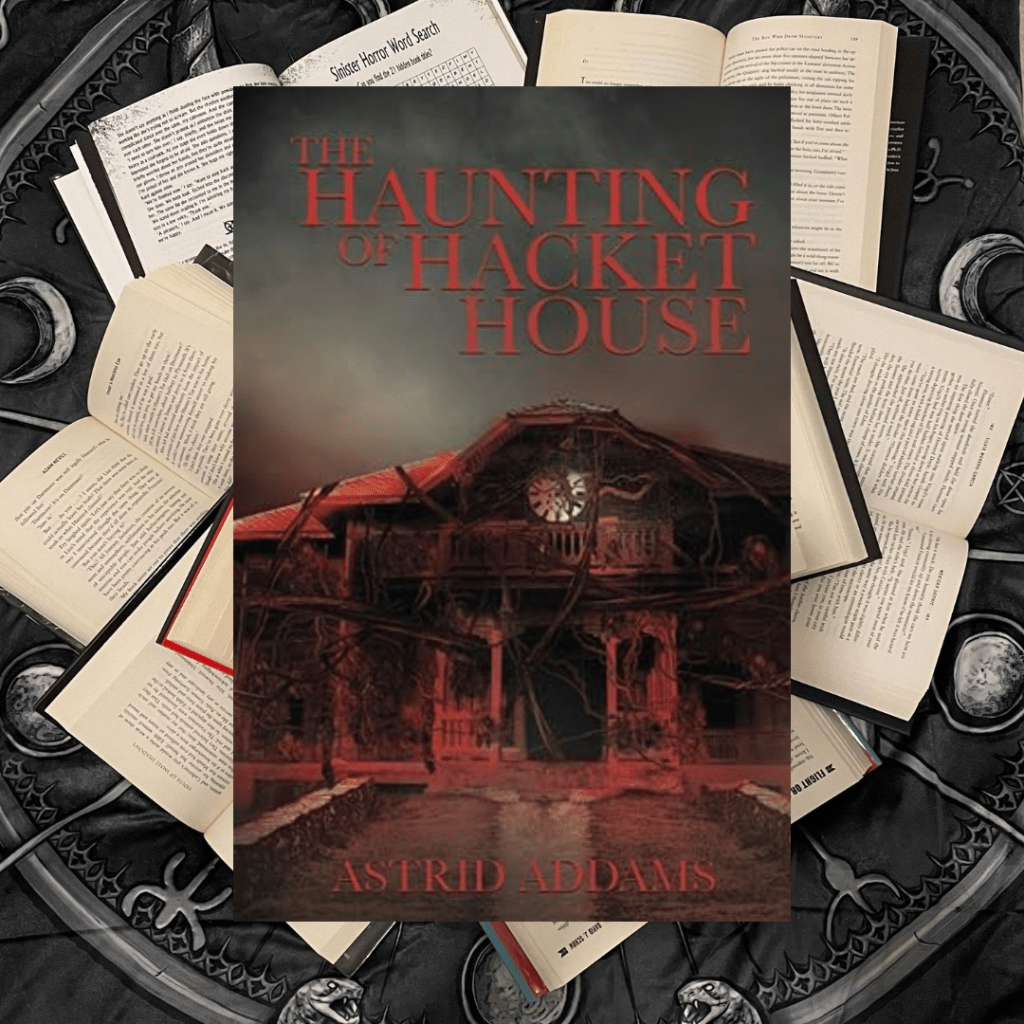
I love the way the ivy that grows unhindered up the exterior walls is described as “exposed bone” holding “the house steady for her.” Although the phrase “pooed in Molly’s shoe” breaks the tension of one scene, provoking a chuckle (defecated might have allowed the reader to stay in the darkness a little longer). Another perhaps minor complaint are the frequent Harry Potter references, which feel uncomfortable in light of Rowling’s recent controversial statements, and I’m not sure why they are included unless it’s done to reveal Jane’s compulsive grip on her past – the childhood books and the single song she always listens to – “White Rabbit”.
The final chapters suffer from an info dump and overuse of the word suddenly. It’s lucky they’re saved by a very satisfying climax, which will not be shared by me – spoilers sweetie!
If you’d like to check out the book or the author, there are some links below for you:
 Happy Goat Horror
Leave a comment