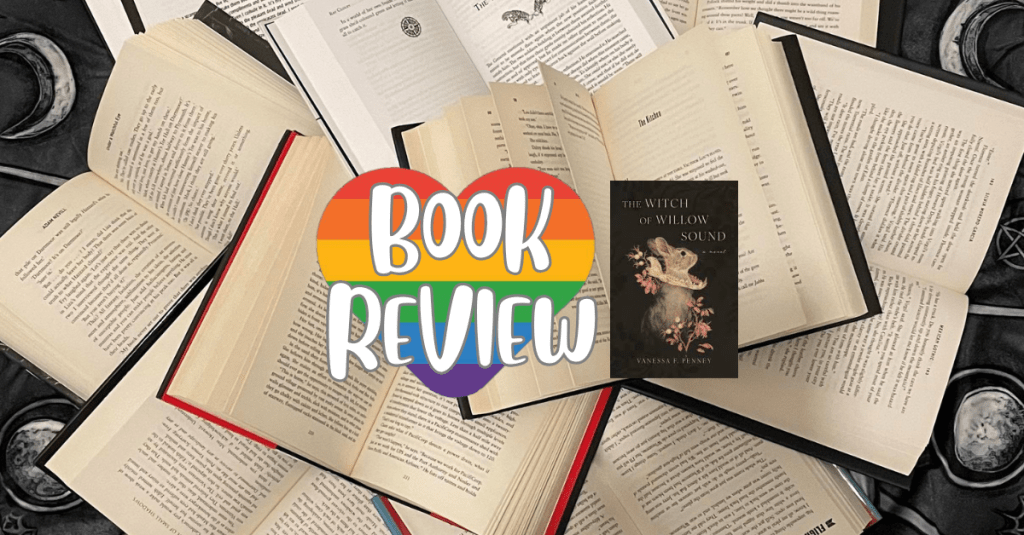
For readers of Our Wives Under the Sea and The Once and Future Witches comes a feminist gothic tale with a tough-as-nails female protagonist who must find her elderly aunt, long suspected of being a witch. A spooky, atmospheric, and fast-paced feminist tale about women called witches and the parts of our history we’d rather forget. Madeline is missing. Ordered to find her, Madeline’s estranged niece Fade must return to the lonely forest of Willow Sound, Nova Scotia. There, Fade discovers her aunt’s once-cosy cottage empty and rotting. The ominous smell of something burnt hangs in the air. In her search for answers, Fade clashes with the people of Grand Tea, a nearby village struggling under the shadow of a massive, looming rock that could tip and crush them all at any time. For generations, they’ve invented bizarre lore about Madeline, calling her a witch and blaming her for their misfortunes. They’ve had more misfortunes than ever lately. And a hurricane is coming. Inspired by real East Coast traditions and witch lore, The Witch of Willow Sound is a modern gothic tale that explores family lost and found and throws firelight on dark truths about what societies do with the people, and the past, they don’t want.

Dark bleatings, my spooky tribe. I have a glorious book to tell you about today. Interesting protagonist, a town called Grand Tea (I just love that) built for folk horror, local superstition, folklore, and paranoia about witches. Fade returns to her auntie’s woodland home after many years away, because her auntie is missing. She is not exactly welcomed into this tiny town, on account of everyone being terrified of her auntie because they think her a witch, and so they also fear Fade by extension.
As Fade delves deeper into the mystery of what happened to her aunt, the town gets more and more riled up about the empty property and their “local witch history”, and the arrival of a magnificent storm heralds in the absolute chaos that was dying to break out all along.
So, is it good? Is it a let down? Is it awesome?
I have two complaints, and one of them is such a silly little nitpick that you can feel free to roll your eyes at me over it. Let’s start with that one. It’s the word “frig”. Fade uses it so often, in lieu of harsher words beginning with F. I assume this was maybe a marketing decision so that the book could be recommended for New Adults and even YA, as well as Adults. That’s the only way I can justify it because censoring her language to such a degree felt a bit off to me, considering who Fade is presented to be.
She’s homeless (so she’s been through some stuff), and I won’t spoil the reason that she’s homeless but it involves her previous, mentally brutal line of work, and she’s also someone that we’re told several times loves a fight. I just find it really hard to believe that this combination of character details produces someone whose language is always so wholesome and clean. That’s something I felt the need to mention, but honestly not a criticism I’d mark the book down over.
The only other thing I can whinge about is that I just wish the horror elements were a little stronger and scarier. We’ve got such a perfect combination of elements and themes here, and while the story was fantastic, for my personal tastes, I would have loved a bit more savagery. The prologue that opens it involves descriptions of what happens to the human body when it’s on fire, and it was so atmospheric and compelling and scary, so I was a bit disappointed that by comparison, the rest of the book was very light in this regard.
However, the many things I loved far exceeded those two criticisms. The mystery of what has happened to Fade’s aunt gets deeper and more complicated, but in an interesting way, rather than a convoluted one. As we learn about her through Fade’s memories, her abandoned house, and a local historian who’s obsessed with witches, I fell in love with this aunt. She seems so lovely and unique, and her story was interesting.
I also think the author did a fabulous job with the characters. Firstly, they’re painted so well that you can easily see them as soon as they’re introduced. The only other author I’ve read that is so effective so quickly at putting characters into your mind like that is Rachel Harrison. Even the off-screen characters are strong in presence and full of personality.
Perhaps my favourite thing about the story was its handling of witchcraft and the perception and reality of witches, and women accused of being witches. People might think of women burning at stakes and being drowned because some guy’s crops failed or the weather was bad as a thing of the past, but the social issues surrounding women’s rights, autonomy, and how we’re unjustly judged and punished for things by the patriarchy is still as relevant as ever. These themes are so beautifully sewn into the narrative but without being heavy-handed or dancing at the forefront. This story is about a supposed witch and her niece’s quest to find out what happened to her, and the themes are there to accentuate elements of it, but not override the main focus.
Lastly, I don’t know what it was exactly about the writing style that I found so more-ish, but I read this book in one sitting. I simply could not put it down. The chapters are short and punchy, and always made me think, “Oh, go on, one more chapter,” until I found that I’d “one more chapter’d” my way right to the end.

Overall, though I wish there’d been more horror in this story, I absolutely loved it and I’d recommend it as a perfect seasonal read. If you’d like to check out the book or the author, I’ve popped some links below for you:
Bleeeeat!
 Happy Goat Horror
Leave a comment