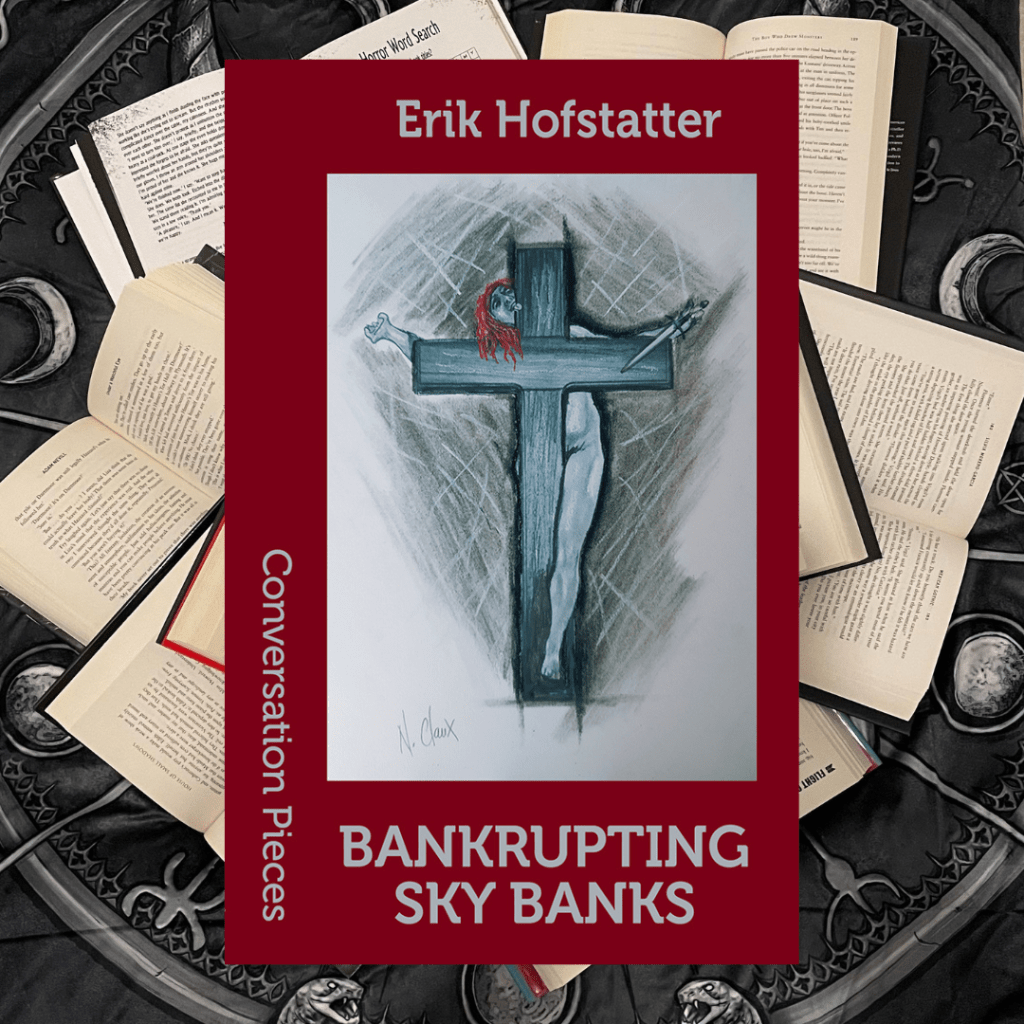
The disquiet in our heads has started fires again. God tries to smoke us out. We have red hair because our heads are alight. But we resist His interpretation. Red also shows our willingness to bleed.
Everyday more flesh leaves our bones. They all leave. The people we love—only out of habit, for contentment. The people we love—only out of respect, for blood shared. Even our own flesh leaves us when we stress. God leaves us when his sky path goes dark. And he waits for us to die so he can peck away. But we don’t know if there’s holy flavor left in us anymore.
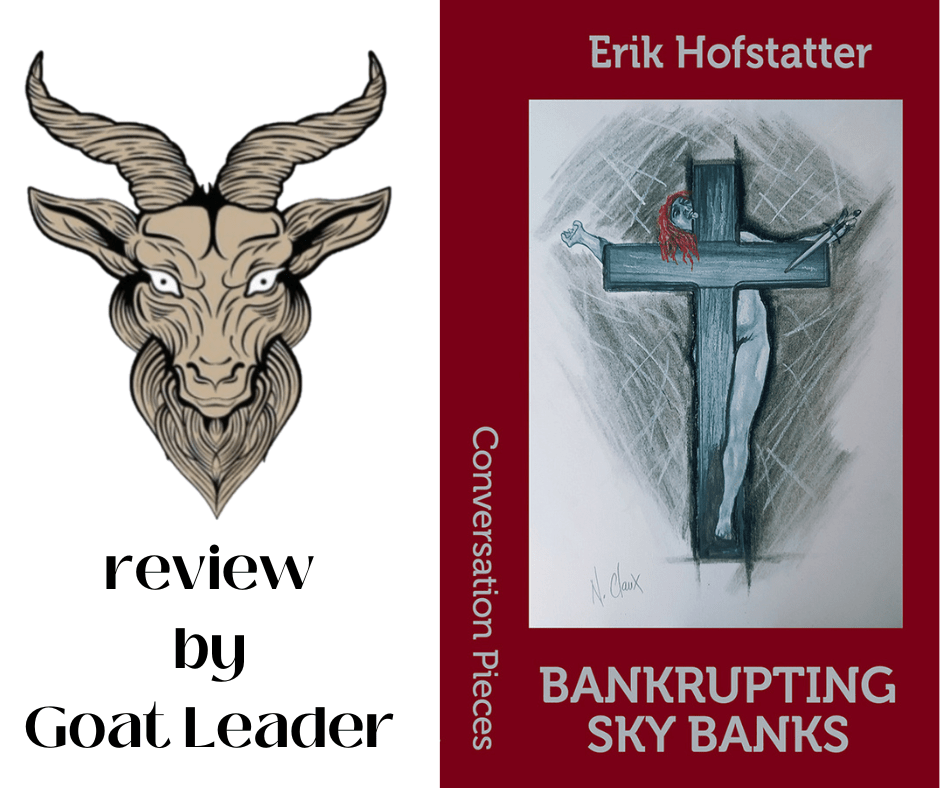
Dark bleatings, my poetic tribe! This is a bit of a weird review for me to do because, as you might already know, I am NOT well-versed in poetry. I basically have a GCSE level understanding of it, and it’s not something I generally pick up by choice. However, sometimes things come my way and I just can’t resist taking a peak. This…is one such book.
I went in blind with no idea whatsoever of what I mind find, and discovered that this book covers one overall story (or family, might be a better way to put it), and each piece is written from a different character’s viewpoint. What struck me first is Erik’s beautiful, evocative use of language. The imagery it conjured in my imagination was rich and colourful, and everything was so wrought with emotion (anger, in particular, in one instance). What struck me next was the occasional vulgarity. It didn’t come out of nowhere or anything, it was absolutely there to emphasise character and voice and to draw attention to and mirror the vulgarity of certain viewpoints and acts, so it was very well used. It was intentionally jarring, I think, because of its juxtaposition with otherwise beautiful word and phrasing choices.
This, I believe, is a story about religious perversion, power dynamics, family dynamics, and some pretty uncomfortable and sometimes incestuous relationships. Also, abuse of power, coercion, and lack of freedom. I think it’s also about consequence.
There’s something tragic about each of the people, Alessia in particular, and I think Erik did a great job in maintaining his own authorial voice whilst giving each character their own flair. This is all first-person poetry and I originally worried that each character would sound the same, but I needn’t have been concerned with that. I found that they were all distinctive, while still using common phrasing, and I liked that because you find that to be the case in all households.
The reason I tend to not opt for poetry is because I never enjoyed what I had to study in school. To this day, I prefer genre fiction to literary fiction, though there are certainly exceptions to this rule, especially if we’re talking literary horror! The reason I never connected with poetry is because – drawing from my extremely limited experience with it – I never found it engaged my imagination. I could either see the picture being painted, but it was being painted for so long and so minutely that I was bored, or the language was so abstract that I found it impossible to imagine and was also bored.
In this case, though I found some of the imagery quite uncomfortable to see so vividly, I did see everything vividly (sometimes against my own will!). I was also deeply engaged with the larger story, the plights of the characters during their viewpoints, and the deeper themes. It brings me much happiness to add this to my “I don’t generally like this sort of thing but this is an exception” list of books. Erik’s points might sometimes go over my head, but his writing is fantastic.
If you’d like to check out the book or the author, I’ve popped some links below for you:
Bleeeeat!
 Happy Goat Horror
Leave a comment